There & Back Again: Korea 2016

안녕하세요!

Well, yet another adventure in Korea has come and gone, and impacted my life in ways that I did not foresee. Each time, I am asked if I’m really going again, and each time I somehow manage to go again by finding scholarships and fellowships and saving my own money. And each time, people ask me when I’m going back.

The answer hasn’t changed: I don’t know. And that’s okay. I have my senior year of undergrad to finish, and my future to consider. It will probably be a good while before I can go back.

In the meantime, I’m going to reflect on the past two months as well as 2014 and 2015 before I start sharing more focused posts.

This fellowship was very different from the two previous times I’ve gone to Korea. In 2014, I was an exchange student for a semester and took courses like a normal student at Yonsei University. I lived in the dorms, I made numerous international friends, and I finally got to test my Korean skills in a truly Korean environment. I took intensive Korean and my skills improved rapidly. I attended countless concerts and special events, traveled deep into the countryside, and even got really sick several times from overbooking myself for classwork and for fun things. Most importantly, I went on mini-excursions on my own all around Seoul in an effort to find ‘me’. It was a period of immense growth and one of the best times of my life.

And attending 연고전 redefined my concept of “school spirit”.

I spent summer 2015 at Yonsei as well, but this time as a student in the International Summer School program. This meant that I lived in the exact same dorm as before, attended courses in the same buildings, and met a new group of international students (primarily from the U.S.). Again, I took intensive Korean, but I suffered from a severe drop in confidence in my language skills as most of my classmates were native speakers who had grown up in the U.S.

As in 2014, I attended concerts and events and traveled out of Seoul, this time on a brief trip to Boseong’s green tea fields. I spent much of my time in Cafe Noriter in Edae. For summer 2015, Korea to me was in some ways different from before, but still so much was the same – perhaps too much. Instead of being pushed out of my comfort zone, I simply returned to the one I had built the previous year when I was an exchange student.

That’s not to say that I didn’t have a fantastic time.

But let’s talk about 2016 now.

For the past two months, I was not at Yonsei. I did not live in a dorm. I entered knowing only one student in my program at Sungkyunkwan University. I attended no concerts. Yet for all these differences, it was the right way to spend my third time in Korea. At this point, I have already attended so many varied cultural events that the ones offered by my program or that friends invited me to were ones I had already attended in past years.

20160627_132721.jpg

A quiet summer evening on SKKU’s main campus

I realized a new dream, one that I fulfilled throughout June and July: that of feeling truly like I was living in Korea like anyone else. I was independent, and yet also a person absorbed into the existing millions. While it was far beyond my comfort zone, I was simultaneously scared and thrilled to be pushing myself again. My schedule was my own; my mealtimes were dependent on me alone. I did not have the community that a dorm provides, and I lived a long bus or subway ride from SKKU. I wasn’t taking intensive Korean – in fact, I only had one course on human rights, and it was incredibly intensive and informative. I wasn’t interested in making friends during my program because I already had people I wanted to spend time with and places that I wanted to go. Things were very, very different.

And I drank a lot of coffee.

And I loved it. I lived in cafes, I studied on my own schedule. I commuted on sweaty buses with the rest of the teeming masses of students and workers in the morning and evening because I could no longer simply walk out of my dorm and into the next building for class. I bought books at Kyobo and wrote poems in pastry shops, and after a while I started running into people in my neighborhood that I recognized. I became a ‘regular’ at cafes and restaurants, someone who was recognized and welcomed a bit more than the general groups of strangers. Where I lived truly began to feel like my town – or perhaps, in the style of Korea, I should say it was ours.

Rain or shine, Hongdae was home.

Also, the most thrilling and different thing from my previous two experiences in Korea was that this time, a language exchange friendship of the past half year blossomed into a dating relationship and that deeply affected how much I practiced speaking Korean and how much I traveled around Seoul and the surrounding regions. As a result, I also experienced a variety of things that I would not have imagined, like attending a Korean wedding, meeting my Korean boyfriend’s family after he told them he was dating me, and learning more about Korea’s couple culture firsthand (ㅎㅎㅎ couple shoes, anyone?). It also vastly increased the stares – a mixed-race couple rather than simply a foreigner draws even more attention ㅋㅋㅋ


https://www.instagram.com/p/BH9se_tgMwG/?taken-by=jaemijamie


Of course, it also changed how I felt when I had to leave at the very end of July, as it was no longer just about leaving Korea, but rather about leaving him…

love-and-other-drugs

너무 보고 싶다. #롱디

At least he’s transferring to a U.S. university a few states away. I’ll just listen to Roy Kim’s 롱디 on repeat until I can visit him!

Anyways, I just want to say thanks, Korea, for another incredible time. I look forward to returning someday soon and in the meantime, I promise to improve my Korean.

읽어 주셔서 감사합니다!
지금 재생 중:

서울드림’s Creator Featured in ATK Magazine

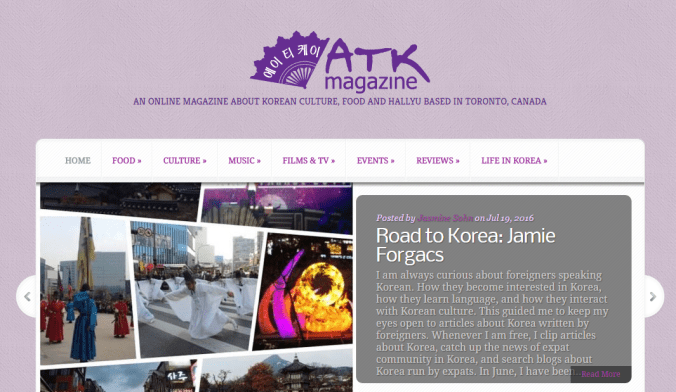
A few weeks ago I was contacted by Jasmine Sohn, a contributor to ATK Magazine, and she asked to interview me about my Korean language study journey and this little rambling blog of mine. The interview was posted recently and is currently featured on the magazine’s main page!

ATK Magazine

ATK Magazine is an online magazine based out of Toronto, Canada, and it covers all things Korean. Road to Korea is one of the categories curated on the site and it is comprised of a series of interviews with various bloggers, each of them exploring the reasons why foreigners develop a deep interest in Korea as well as delving into each interviewee’s personal backstory and continued involvement with Korea.

If you’re interested in learning more about how I developed my passion for learning Korean and how I like to spend my time in Seoul, you can check out the interview here.

Shout out to Jasmine and ATK Magazine for the fun interview!

읽어 주셔서 감사합니다!

지금 재생 :

https://www.youtube.com/watch?v=rxCTnadDdRI

“All we have to decide is what to do with the time that is given to us.”

“저희에게 주신 시간을 어떻게 쓰는지 결정해야 할 뿐이다.”

“All we have to decide is what to do with the time that is given to us.”

– J.R.R. Tolkien

직접 번역한 것이라서 틀릴 수도 있다. 있으면 죄송합니다.

이제 한국에 온지 벌써 2주일 지났는데 아직도 꿈이 같다. 시간이 천계천 같이 흐르고 생각보다 끝이 올건데도 지금은 지금이다. 현실이다. 지금 있는 시간이 잘 써야 된다.

지금 재생 중:

Seoul Guide: Getting to/from Incheon International Airport

seoulguide

If you’re traveling to South Korea, you’re probably trying to figure out how to get from the airport in Incheon to Seoul. Even though almost everything is in English, if you don’t speak Korean, getting out of the airport might be intimidating (and even if you do speak Korean, it still may feel a bit overwhelming). Here are your options.  Continue reading

한국으로 돌아간다

“사람이 왜 떠나다? 돌아올 수 있기 위해. 온 곳을 다시 볼 수 있기 위해. 거기에 있는 사람들도 당신을 다시 보죠. 시작한 곳으로 돌아오는 것이 한번만이라도 안 떠나는 것과 다르다.”

“Why do you go away? So that you can come back. So that you can see the place you came from with new eyes and extra colors. And the people there see you differently, too. Coming back to where you started is not the same as never leaving.”
― Terry PratchettA Hat Full of Sky

곧 한국으로 돌아가기로 해서 좋은 글귀를 찾아서 번역해보았다. 틀린 것이 있으면 죄송합니다.

다음 주부터 한국에서 글을 쓰고 올릴게요! 여러분 한국어 공부를 재미있게 하세요!

지금 재생 중:

역시 마마무다!


Puns in Korean: Captain Americano | 캡틴 아메리카노

I am known among my friends as a lover of puns, and this manifests itself as part of my passion for studying Korean. Korean variety shows, particularly Family Outing, seem to have a similar penchant for wordplay, and so I’ve learned a great deal noting down not just what phrases are puns, but which ones are particularly bad (based on the explosive reactions of those who hear the puns). Here is a Reddit filled with cringe-worthy submissions that will make you regret ever reading this post. You’re welcome.

I recently saw Captain America: Civil War, and like any good and studious Marvel fan/Korean language learner, I promptly created a pun out of the name. Though this never occurs while reading the title in English, every time I read 캡틴 아메리카 in Korean, my mind auto-completes it as 캡틴 아메리카.

Captain America → Captain Americano

Incredibly witty, I know.

But this bad pun origin story doesn’t end there. A few months ago, I learned the connotation behind 라면 먹고 갈래 (not unlike “Netflix-and-chill”) Accordingly, I included a 한잔하고 갈래 with my 캡틴 아메리카노 photoshop edit.

https://www.instagram.com/p/BFo7QarlTUB/

I would gladly enjoy an Americano with you, Captain America. And to my readers, I know. I’m super cool. #icecubestatus

Hope you enjoyed this non-serious post!

읽어 주셔서 감사합니다!

지금 재생 :

#wyd tho…

BONUS: Here’s even more reasons to regret reading this post:

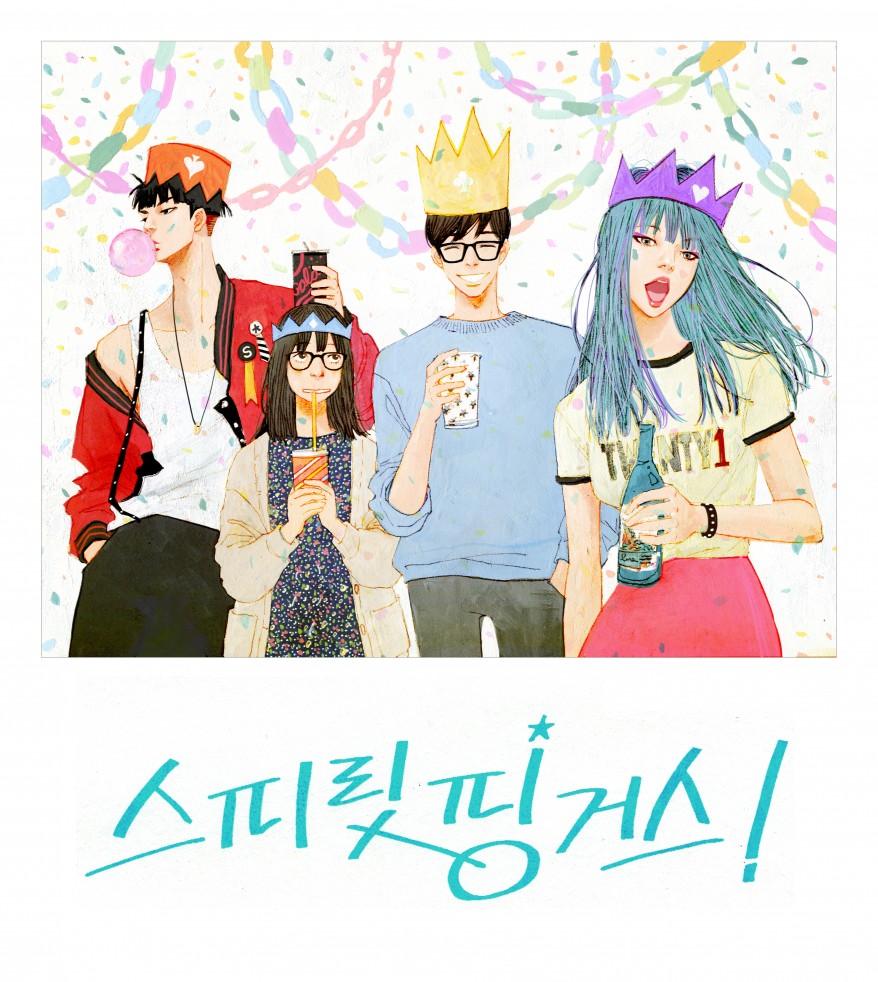
4 Reasons To Read “Spirit Fingers” (Korean Webtoon) Right Now

Lately I’ve been really into a newer webtoon called Spirit Fingers (스피릿 핑거스) and unfortunately I finally caught up with all the currently released chapters, which means that I now have to wait a week between each new installment. While I wait, I thought I’d tell you about why you should check out this webtoon. As I’ve written before, webtoons and manhwa are a great way to practice Korean.

009-e1438849493245

The art is fantastic.

I can be a bit of a snob when it comes to watching or reading things that are created not only to tell a story but also to please or provoke in a visual way, like anime, manga, manhwa, webtoons… These are art forms, and if I don’t like the style, I really won’t be able to enjoy the story. #snobstatus

Spirit Fingers has scenes that are so pretty that I just want to drool on my phone screen. I found this webtoon by accident, I judged it by its art style and decided to keep reading, and I was not disappointed. And not only is the art great, but art is the thing that brings the characters together in the first place!  

Continue reading

Naver Open Dictionary exists (& you should check it out)

안녕하세요!

If you’re like me and are constantly looking up one word or another and jotting down its meaning, you also probably have encountered words that you can’t find definitions for anywhere. Sometimes I switch between online dictionaries (my main is Naver and Daum is my backup) in order to find more uncommon or unknown words but there are other times where even a random Google doesn’t reveal any hints as to when the word is used or how.

What then? You could either ask a Korean person via Kakaotalk or Hellotalk or you can head over to Naver Open Dictionary. Open Dictionary is a tool by which anyone can submit an unknown word in pretty much any language and ask for people to give their own definitions. This is extraordinarily useful especially if the word or phrase is slang and/or it also needs cultural contextualization. Continue reading

Studying Abroad in Korea: Sungkyunkwan Student 2016

ais oo

A year and one week ago I announced that I was headed back to Yonsei University and Seoul for the summer. Guess what! I’m going back, and this time it’s to Sungkyunkwan University. That’s right. The location of Sungkyunkwan Scandal. Let that sink in for a bit.

lofwx8c

Same, Tablo, same.

Continue reading

Advanced Korean Slang: 등산할 때 불륜 | Extramarital Affairs on the Mountainside in Korea

Recently I found out about what really is going on with all those middle-aged Koreans in their stylish hiking outfits and every-weekend trips to hike mountains in Seoul. Hop on the subway early in the morning on Saturday or Sunday and you’re bound to see the flocks of 아줌마들 and 아저씨들 moving en masse to the foothills where the hiking trails begin.

But apparently all is not as it seems, as my language partner informed me – “불륜이 (affair, adultery, unfaithfulness) 많아.” Whilst hiking in the densely forested mountains, alongside a man from a hiking club who has aged but still has the signs of the handsome features of his youth, an ahjumma might think of her husband on the couch at home, drinking, and she starts thinking some more…and perhaps this is how these affairs begin.

To be honest, I’d rather not think too deeply about it. I will leave it to you to imagine (or not) as you desire. Instead, consider doing this next time you go hiking in Korea and see if you get the same reaction:

KakaoTalk_Photo_2016-04-20-14-44-16_84.jpeg

“Bro, shall I teach you how to distinguish cheating couples?” “???” “HONEY! WHO IS THAT PERSON?” *couples swiftly separate, sweating nervously*

If you’re interested in reading up on suggestions of how to tell if someone’s cheating while  climbing mountains, you can check out this Korean blog post.

읽어 주셔서 감사합니다!

지금 재생중:

A song fitting of this topic, though I’m not a fan of people who cheat…