
단어짱: Usage of 셈이다

my daneo jjang

셈이다 was one of those Korean expressions that just wouldn’t stick with me. Each and every encounter sent me back to the dictionary. Finally, my S.O. explained it to me in such a simple and helpful way that I’ve never had to look it up again. Let’s break it down.

Firstly, it usually shows up as ~은/는/을 셈이다. This enables a Korean speaker to attach a verb phrase to the front of it, i.e. 농담을 하는 셈이다 or 결혼할 셈이다.

Secondly, 셈이다 itself is actually a noun + verb.

셈 + 이다 (to be)

Thirdly, 셈 is the noun form of the verb 세다 (to calculate or count). Just remove the ~, add , and you get , or the “act of calculation/counting”.

When 셈이다 is used, it usually means that two things are being compared or equated. They are considered to basically be the same thing. In English, we might say something like, “I counted him as one of my friends.” The person in question and the identity of friend are one and the same (And coincidentally, if it helps you remember it, the pronunciation of 셈 and same are similar).

This is essentially verbal equation.

Example from Naver dictionary:

담벼락하고 말하는 셈이다.

You might as well talk to a stone wall.

Here, the speaker is equating talking with their subject to talking to a stone wall. If you remember 셈이다 in its base form of “to calculate or count”, then you can remember its meaning more easily!

읽어 주셔서 감사합니다.

So, I Made A Webtoon

It started off as one of those far-fetched ideas. “Hey, it’d be cool to write a script for a Korean drama someday. Hey, what if I made the plot for my book into a webtoon?”

This isn’t a plot from one of my books, but sure – it could be remade into a K-drama someday. In the wise words of that kid from Angels in the Outfield, “It could happen!” Who knows? Why limit myself with fears of failure?


img_0033.jpg

The title: ㄹtalk (aka Real Talk. Somewhere in the distance, my friends are all cringing at my never-ending obsession with puns)

The plot: A young Korean scholar from the late 1800s accidentally time-travels to modern America and masquerades as an exchange student. With the help of an American college student majoring in Korean Studies, he navigates college life in the U.S. and learns “real English” until he can figure out how to get back to his own time and country.

The goal: teach non-textbook English in a fun way

The format: webtoon (an online Korean comic) on Naver Webtoons

REAL TALK HAS BEGUN part 2

Not gonna lie, my S.O. gave me the 10/10 stars. 

I won’t pretend to be the world’s best artist. I’m better with writing words than drawing faces, and sketching noses is my arch enemy. It’s been a lot of trial-and-error trying to find an art style that won’t drive my innate perfectionist mad. And I’m not sure where this webtoon will take me, or even quite sure where I’ll take this webtoon.

But that’s the fun of it.

It’s an open and uncertain adventure, and I hope you’ll join me here. Better yet, if you have a Naver account and like my work, please do rate the webtoon and leave comments. It means a lot.

sille-sillehabmnidaaaa

Me as you flee my overwhelming awesomeness.

감사드립니다.


지금 재생 중

Korean Slang: 마법의 날, Period

my daneo jjang

In a recent story arc for one of my favorite webtoons, 떨어지는동거, a Korean slang is featured as the title. Several chapters in a row are titled 마법, or magic.

Webtoon Magic

But this arc isn’t really about magic. It’s actually about the female protagonist getting her period – which in Korean slang is referred to as 마법. Yeah, that’s right.

Magic gif.gif

Gif from Giphy

Continue reading

Entry-level and Experienced Company Workers: 신입 사원 vs. 경력직

my daneo jjang

Recently I came across an interesting differentiation between entry-level workers in Korean companies and employees who might be new to the company but not new to the industry. The former is called a 신입 사원, and the latter is a 경력직 or even 경력직 사원.

But it’s important to draw a distinction between these titles. While it’s quite common for a new hire who has never had a job before to introduce themselves as a 신입 사원 (신 new, 입 entrance/to enter, 사원 employee/worker), it’s unlikely that someone who was hired with experience in the field or industry is going to call themselves a 경력 사원.

Instead, as I encountered in the original sentence from 언어의 온도 by 이기주, they will probably talk about having transferred or moved companies.

“그는 경력직으로 회사를 옮겼고 그곳에서 동료 여직원을 보자마자 한 번도 느껴본 적 없는 낯선 감정에 빠져들었다.”

“He transferred companies as an experienced worker…”

This worker’s value and type of entry to the new company was based on his experience, or 경력. 직 comes from a Chinese character (職) meaning post or position.

Some other office- and company-based vocabulary:

  • 경력서 resume or CV
  • 직장인 office worker (same  hanja as 경력: 職)
  • 회사에 입사하다 to enter a company (as an employee)
  • 퇴사하다 to resign, step down from, quit one’s job or company
  • 퇴직하다 to retire (same  hanja as 경력: 職)
  • 출근 / 퇴근 commuting to work / commuting home
  • 사무실  office
  • 회식 company or work dinner with colleagues and manager

Most office and company-based vocabulary have associated hanja, so look for similar syllables and characters to help you remember their meaning.

For example, 출 is to head out or embark while 퇴 is to leave something or somewhere (발, 학). 경 relates experience (think 험, 력, etc.). 력 refers to ability (능). 실 is associated with rooms (화장). 회 is community or group (사), and 식 has to do with food (음).

Looking for a way to practice this vocab? A great office K-drama is Misaeng, or Incomplete Life. You’ll hear all these words and more in every episode.

The more of these building blocks that you learn, the easier Korean vocabulary will become. It’s a puzzle – all you need are the pieces and you can put the meaning together.

읽어 주셔서 감사합니다.

A Street Named Freedom

my daneo jjang

안녕하세요!

I’m working my way through the bestselling book, 언어의 온도, aka The Temperature of Language, and not everything is as it first seems. Take this excerpt:

“몇 해 전, 봄을 알리는 비가 지나간 스산한 저녁이었다. 출판도시에서 일을 보고 차를 몰아 자유로에 진입했다.”

자유. Ja-yu. It means freedom, it means liberty; it’s a word with a relaxed approach to things. In translating this line, I calmly attributed this word to the author’s description of her driving style, but I was still confused by the usage of ~로 and ~에 at the end of 자유.

When my S.O. checked my work and left a corrective comment, I couldn’t stop laughing.

Apparently 자유로 (自由路) is a famous road in Korea, one that runs from Seoul to Paju, which is a city ripe with publishing companies and considered the publishing capital of Korea, just south of the demilitarized zone. It’s known for being a place where ghosts are spotted, and it’s quite literally called Freedom Road. It never occurred to me that it was the name of a street, even though I’m familiar with 로 denoting a road rather than being used as a grammatical marker.

“A few years ago, the passing rains spoke of spring, and it was a bleak evening. I had work at the Publishing City, and I entered through Freedom Road, driving my car.”

There’s even a Liberty Street near where I live, and it’s a common enough name for a road; isn’t it interesting that my mind couldn’t make that seemingly obvious conclusion? This is why I love translation; this is why I’ve served as a translator for Humans of Seoul for two years now. There is always some new nuance to be uncovered, like buried treasure hidden in the silt of everyday conversation.

감사합니다.

지금 재생 중

2018년: New Year, New Goals

여러분 안녕하세요! 늦었지만 새해 복 많이 받으시길~

And just like that, another year has come and gone.

The latter half of 2017 was a terrible year for my Korean language studies, but the rest was fantastic. I was enrolled in my teacher’s specially-designed independent study to write nine-episode fanfiction (mine’s published here). I also started my honors thesis around this time last year, and for several incredibly intense, fast-paced months, I immersed myself in prose, poems, and dusty tomes from the university library.

My thesis centered on The Girl Who Wrote Loneliness by Shin Kyung-sook (famous for Please Look After Mom and I’ll Be Right There). While I mainly referenced the English edition, I had the Korean (titled 외딴 방) to verify which Korean words were used for what. The nuance of the translation of ‘factory girl’ from Korean words like 공순이, 여공, and 노동자 was a vital part of my analysis. The history and culture surrounding each word is different, and it makes a huge difference in contextualizing meaning and emotion.

This is the nuance of language, the nuance of feeling: the essence of the everyday. Continue reading

스핑 팬픽 에피 9: 너라는 꿈속

둘이 움직이지 않고 서 있었다. 뒤에서 온 기정이는
우연이를 껴안아서 우는 소리를 작게 내고 있었다. 우연이가 기정이의 머리를 쓰다듬자 기정이의 울음이 그쳤다.

“못된 안예림의 복수 땜에 난 널 또 다시 놓친 줄 알았어. 너무 무서웠어, 우연아. 널 또 놓칠 수도 있다는 생각에 진짜 죽을 뻔 했단 말이야.” 속마음을 털어놓고 있는 기정이가 우연이를 계속 껴안고서 말했다. Continue reading

스핑 팬픽 에피 8: 그리고 그는 왔다

 이제 일주일에 두 번씩 나오는 드라마가 3회까지 방송됐지만 드라마에 대한 인터뷰나 관련 기사가 나올 때마다 우연이는 반드시 찾아 봤다. 머릿속에서 키워 손으로 만들어 낸 그 이야기를 티브이에서 볼 수 있었다. 얼마나 좋은지 몰랐다. 그리고…기정이를 다시 보게 된 것은 생각보다 괜찮았다는 생각이 들었다.

이번에는 감독을 만나러 회사에 온 겸 우연이는 티브이를 보면서 우연이가 크로키를 하고 있었다. 지나가고 있는 스탭들은 보통 인사를 하고 계속 걸어갔지만 갑자기 한 명이 우연이 앞에 멈추었다. 어느덧 지나가고 있는 태신이었다. 잠시 후에 태신이가 우연이 옆에 앉았지만 우연이는 상관없이 계속 티브이를 보며 스케치했다. 바로 그 때 티브이에서는 기정이의 라이브 인터뷰를 방송하고 있었다. 태신이도 티브이를 봤다. Continue reading

스핑 팬픽 에피 7: 네 생각이 나

“아니, 대체 어떻게 내 방에 들어오게 됐냐? 제대로 대답 안 해? 우연아. 어젯밤 기정이 만났지?” 그린이가 침대에 앉아서 우연이를 바라보았다. 잠을 아직 자는 척하며 대답하지 않은 우연이는 설명하지 못한 채 입을 다물고 있었다.
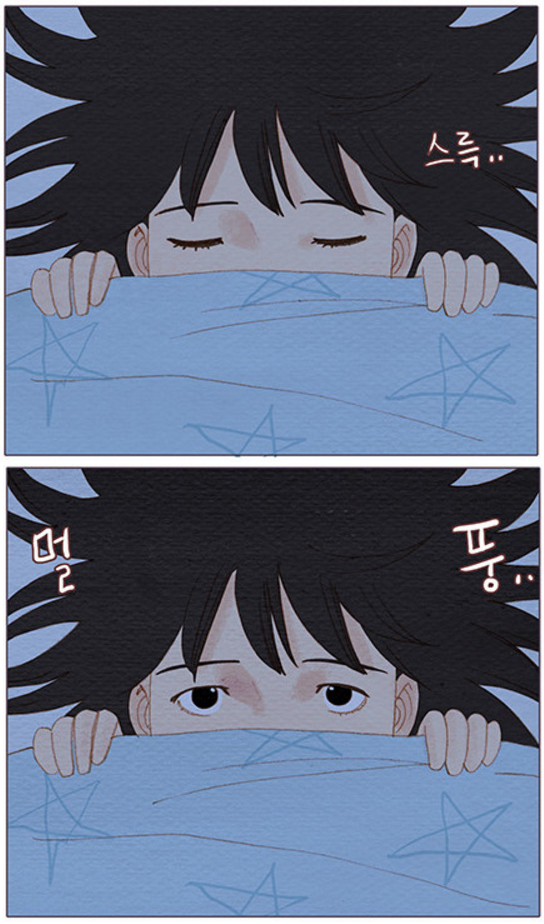
“알았어. 대답하지마. 남똥이한테 물어봐야지…” Continue reading

스핑 팬픽 에피 6: 우리 돌아갈 수 있을까?

시간이 또 흘러갔다. 가끔 낮에 땀을 몹시 흘릴 만큼 더웠고 밤에 부는 봄  바람은 도시 길거리를 깨끗하고 시원하게 했다. 몇 주 전부터 촬영은 시작이 되었고 우연이는
대본 쓰기와 공부에 집중하느라 기정이와 키스했을 때 이후로 기정이를 보지 않았다. 당연히 매일매일 그 키스가 떠올랐다. Continue reading